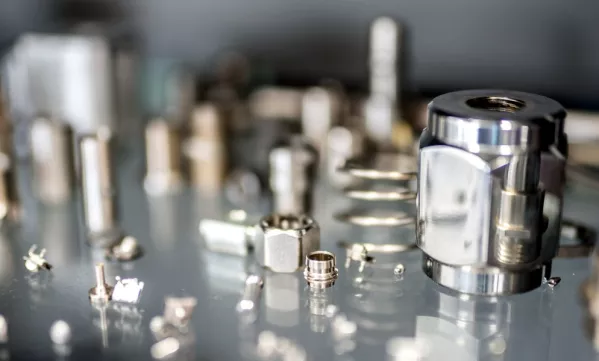
In CNC machining, precision, repeatability, and quality of execution are what matter. However, even the best-machined part is not always ready to perform in demanding conditions. In many applications, a properly selected electroplating coating plays a crucial role — not only improving the appearance of the component, but above all significantly increasing its durability and functionality.
At TOKAR CNC Technology, we know that the production process doesn't end with machining — it's the surface finishing that often determines the final quality of the product.
Electroplating coatings are very often associated solely with aesthetics. A shiny surface, uniform color, or decorative effect certainly matter — especially for components visible to the end user.
In practice, however, their role is far broader:
A properly selected coating ensures that the component retains its properties over a long period of time, even in highly demanding working environments.
Many metal parts operate in conditions exposed to moisture, fluctuating temperatures, or contact with aggressive substances. Without adequate protection, even high-quality steel can deteriorate.
Electroplating coatings create a protective barrier that:
In industries such as medical, food processing, and manufacturing, this is critical for the safety and reliability of equipment.
The choice of coating should always be matched to the intended use of the part and its working conditions. The most frequently used types include:
One of the most popular methods for protecting steel. A zinc coating:
Widely used in the mechanical engineering and construction industries.
A nickel coating combines protective and decorative functions:
Frequently used in precision components and parts subject to wear.
Used where high wear resistance is required:
Applied, among other things, to moving parts and components subject to intensive use.
An electrochemical process that:
Commonly used in the electronics and medical industries.
There is no single universal coating for all applications. Each industry has its own specific requirements:
This is why it is worth considering which coating will best suit a part's function already at the design stage.
Applying electroplating coatings affects the dimensions of the part. Even a thin layer can matter when dealing with very tight tolerances.
That is why the following are essential:
At TOKAR CNC Technology, we pay particular attention to this aspect to ensure that the finished part meets all technical requirements.
Modern manufacturing is not just CNC machining — it also means consciously managing the entire process, from design through material selection to surface finishing.
Through collaboration with specialized surface treatment partners, we are able to deliver components that are:
The right electroplating coating is not an add-on — it is an integral part of a component's functionality. It is often the coating that determines the durability, resistance, and reliability of a component under real working conditions.
That is why we take a broader view of production than machining alone — we care about every stage that influences the final quality of the product.

TOKAR CNC Technology Mateusz Maćków
