Stainless steel has remained one of the most important materials used in modern industry for many years. Today, it is difficult to imagine the medical, aerospace, food processing, energy or automotive industries without it. Its corrosion resistance, durability and excellent mechanical properties make it indispensable wherever reliability and top-quality workmanship are required.
At the same time, it is a demanding material. Machining stainless steel requires exceptional precision, advanced technological facilities, and the experience of operators and process engineers. That is why modern manufacturing companies such as TOKAR CNC Technology rely on advanced CNC technologies and specialized machining strategies that enable the highest level of accuracy while maintaining production efficiency.
Although stainless steel is mainly associated with corrosion resistance, its properties also significantly affect the machining process. During cutting operations, this material behaves very differently from standard structural steel.
One of the greatest challenges is its strong tendency to work harden during machining. This means that the material rapidly increases its hardness in the contact zone with the cutting tool, leading to accelerated tool wear. Additionally, stainless steel has low thermal conductivity, which causes a large amount of heat energy to remain concentrated directly in the cutting zone.
In practice, this means that machining parameters must be controlled with extreme precision. Even minor mistakes can lead to reduced surface quality, loss of dimensional accuracy, or shorter tool life.
Effective stainless steel machining requires modern CNC machines capable of maintaining high process stability even during highly demanding technological operations.
At TOKAR CNC Technology, automation and production repeatability play a crucial role. Advanced STAR Micronics sliding headstock machines make it possible to manufacture even the most demanding components with micrometer-level precision. This allows the production of parts used in industries such as medical technology, electronics and precision engineering.
Modern stainless steel machining today is based on several key factors:
It is the combination of these elements that makes it possible to achieve high surface quality and extremely tight dimensional tolerances.
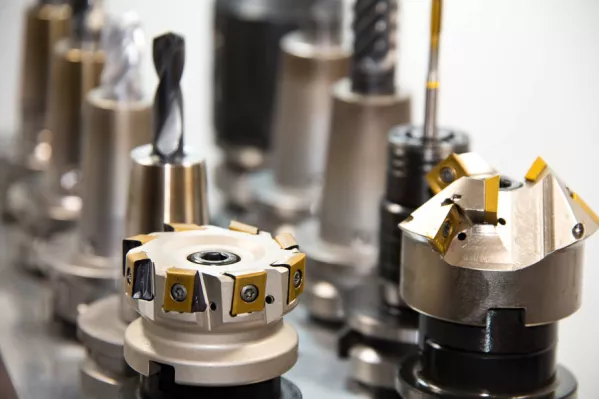
Modern stainless steel machining would not be possible without the rapid development of cutting tools. Today’s inserts and tools are made from advanced materials that must simultaneously maintain extremely high hardness and temperature resistance.
Modern PVD and CVD coatings play a particularly important role by reducing friction, improving wear resistance and minimizing the risk of built-up edge formation. Increasingly, manufacturers are also using specialized tool geometries designed specifically for machining austenitic and acid-resistant stainless steels.
As a result, manufacturers can increase production efficiency while maintaining outstanding surface quality.
One of the most critical aspects of stainless steel machining is efficient heat dissipation. Modern industrial facilities use advanced high-pressure cooling systems that precisely direct coolant streams straight into the cutting zone.
MQL (Minimum Quantity Lubrication) technologies are also becoming increasingly popular, as they reduce coolant consumption while improving the environmental sustainability of the production process.
In the most advanced industrial applications, cryogenic cooling using liquid nitrogen is even employed to significantly lower process temperatures and extend tool life.
The importance of stainless steel continues to grow. The development of modern technologies, automation and precision manufacturing means that demand for high-quality components made from this material will steadily increase.
The fastest-growing sectors include:
In many cases, manufacturing tolerances are now measured not in hundredths, but in thousandths of a millimeter. This means the future belongs to companies equipped with modern machinery, advanced quality control systems and highly qualified technological staff.
Machining stainless steel is a combination of material science knowledge, advanced technology and practical manufacturing experience. Every component requires an individual approach, a carefully selected machining strategy and complete control of process parameters.
That is why modern CNC technologies now play a crucial role in the production of components used in the most demanding industrial sectors. Precision, repeatability and reliability are becoming the foundation of competitiveness in modern manufacturing facilities — and stainless steel remains one of the most important materials of the future.

TOKAR CNC Technology Mateusz Maćków
