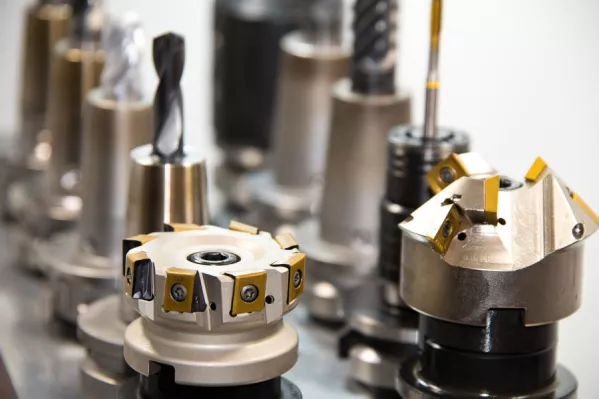
In a modern production facility, it is primarily the advanced CNC machines that attract attention. Powerful milling centers, automatic lathes, and multi-axis machines perform complex operations with impressive speed and accuracy. However, the final result of their work depends on something much smaller – the cutting tool, whose edge comes into direct contact with the material being machined.
It is within this tiny area that enormous forces, high temperatures, and precision requirements sometimes measured in micrometers come together. Even the most advanced machine tool cannot ensure the required quality if the cutting tool is incorrectly selected, improperly mounted, or excessively worn.
That is why, in professional CNC machining, cutting tools are much more than consumables. They are among the most important components of the entire manufacturing process.
At TOKAR CNC Technology, we understand that precision begins long before a machining program is started. It is the result of selecting the right technology, tools, cutting parameters, and quality control methods.
Imagine producing a batch of one thousand identical metal components. Each must have a specified diameter, length, geometry, and surface quality. The first several dozen parts may meet all requirements, but as the tool gradually wears, small deviations begin to appear.
Initially, these changes may be almost imperceptible. Over time, however, surface roughness changes, cutting forces increase, and the dimensions of finished components may approach the limits of their specified tolerances.
This is why the selection and monitoring of cutting tools directly affect:
Interestingly, the most expensive tool is not necessarily the best solution. In many cases, what matters more is how well it matches the specific material, type of operation, and working conditions.
Modern CNC machining uses a wide range of tools, each designed to perform specific tasks. They differ in geometry, manufacturing material, mounting method, and operating characteristics.
During turning, the workpiece rotates while the cutting tool removes successive layers of material, giving it the required shape.
Although the operating principle seems simple, modern CNC turning makes it possible to produce highly complex geometries, excellent surface finishes, and outstanding dimensional repeatability.
Different turning tools are used depending on the operation.
External turning tools are used to machine cylindrical, conical, and end surfaces. They are commonly employed in the production of shafts, bushings, pins, and fastening components.
Internal turning tools, also known as boring bars, enable the machining of holes and surfaces inside a component. Tool rigidity is particularly important here, as long overhangs can contribute to vibration.
Grooving and parting tools are used to create grooves, undercuts, and to separate finished components from the stock material.
Form tools reproduce specific shapes and profiles, potentially reducing the number of machining operations required.
In modern manufacturing, turning tools with indexable cutting inserts are particularly important. Instead of replacing the entire tool, a worn insert can be replaced with a new one or another cutting edge can be used, provided the insert design allows it.
This solution reduces maintenance time, helps maintain process stability, and enables better control of production costs.
CNC milling is one of the most versatile machining methods. Unlike turning, the cutting tool performs the primary rotational motion, while appropriate feed movements enable the shaping of the workpiece surface.
The selection of a milling cutter depends primarily on the type of operation and the geometry of the component.
End mills are used to produce pockets, slots, contours, and three-dimensional surfaces. Their wide variety makes them suitable for both simple operations and complex tasks requiring high precision.
Cylindrical milling cutters are primarily used for machining flat surfaces, and their design enables efficient material removal.
Side and face milling cutters are well suited for producing narrow grooves, slots, and cutting operations.
Ball nose end mills are particularly useful for machining three-dimensional surfaces, molds, dies, and components with smoothly changing curvatures.
Chamfer mills are used to create chamfers, prepare edges, and remove sharp corners.
It is worth remembering that even two milling cutters with the same diameter can have completely different characteristics. The number of cutting edges, helix angle, flute geometry, and tool material all influence their performance during machining.
Drilling is one of the most frequently performed operations in mechanical machining. Holes are found in almost every type of technical component, from simple assembly parts to advanced machine components.
However, producing a hole with a specified diameter is only the beginning. In many applications, its position, straightness, surface quality, and geometric accuracy are equally important.
CNC manufacturing uses, among others:
Producing deep holes with small diameters is particularly challenging. In such cases, inadequate chip evacuation can cause the tool to jam or break.
Therefore, the cooling method, drill geometry, and drilling strategy are just as important as the drill diameter.
Threaded connections are widely used in mechanical engineering, automotive manufacturing, automation, and many other industries.
Their reliability depends, among other factors, on the accuracy of the threads.
CNC machining uses machine taps designed for different materials and types of holes. Different geometries are suitable for through holes and blind holes, where effective chip evacuation is essential.
An alternative to conventional thread cutting is thread forming, in which the material is plastically deformed rather than removed as chips.
This method is suitable for materials with sufficient ductility and requires proper preparation of the hole.
In some cases, threads are also produced by thread milling, which offers considerable technological flexibility.
Not every required level of accuracy can be achieved through a single drilling operation.
When a hole must meet particularly demanding dimensional and surface quality requirements, additional finishing operations are necessary.
Reamers improve the diameter accuracy and surface finish of a previously prepared hole.
Boring tools enable precise machining of internal surfaces and correction of hole dimensions and geometry.
Honing tools are used in specialized finishing processes, including the production of cylinders and hydraulic components.
Each of these methods offers different technological capabilities. Choosing the appropriate solution depends on the required tolerance, component geometry, and intended application of the finished part.
One of the most fascinating aspects of modern CNC machining is the development of cutting tool materials.
A cutting tool must be hard enough to remove material while also resisting mechanical loads, high temperatures, and abrasion.
Combining these properties is not easy. Very hard materials can be brittle, while materials that are more resistant to impact may wear faster during intensive cutting.
That is why there is no single universal tool material that is best for every application.
High-speed steel, commonly referred to as HSS, is one of the most recognizable materials used in cutting tool manufacturing.
Its advantages include relatively good toughness, resistance to dynamic loads, and the ability to manufacture tools with complex geometries.
Although modern cemented carbides allow significantly higher cutting speeds, HSS is still used to manufacture drills, taps, and certain milling cutters.
It is an excellent example of a technology that remains useful despite the passage of time.
Cemented carbides are among the most important cutting tool materials used in industry.
They are most commonly made from hard tungsten carbide grains bonded together with a metallic binder, usually cobalt-based.
Their greatest advantage is the combination of high hardness, wear resistance, and the ability to withstand substantial thermal loads.
As a result, carbide tools allow high cutting parameters, leading to shorter machining times.
In practice, they are used both as solid milling cutters and drills and as replaceable cutting inserts.
However, selecting the correct carbide grade for a specific application is essential. A tool designed for high-speed finishing of aluminum may not perform well during intensive machining of stainless steel.
Ceramic cutting materials are characterized by high hardness and heat resistance.
They are used, among other applications, for machining certain cast irons, hardened steels, and heat-resistant alloys.
Under suitable conditions, they allow very high cutting speeds.
Their limitation, however, is greater brittleness compared with many grades of cemented carbide. Consequently, ceramic tools require appropriate process stability and carefully selected cutting parameters.
Superhard materials are used in the most demanding machining applications.
CBN, or cubic boron nitride, is primarily used for machining hard ferrous materials, including hardened steels.
PCD, or polycrystalline diamond, is particularly useful for machining aluminum, non-ferrous metal alloys, and highly abrasive materials.
Diamond is exceptionally hard, but it is not a universal solution. When machining steel at high temperatures, unfavorable chemical interactions can occur, accelerating tool wear.
For this reason, CBN is more commonly used than diamond tools when machining hard steels.
Modern cutting tools often owe their performance not only to the material of their core but also to a thin coating applied to their surface.
Tool coatings are typically only a few micrometers thick, yet they can significantly increase wear resistance and improve tool behavior during cutting.
Their purpose may be to reduce friction, improve resistance to high temperatures, or decrease the tendency of the workpiece material to adhere to the tool.
Titanium nitride, known as TiN, is one of the most recognizable cutting tool coatings.
Its characteristic gold color makes it easy to identify, but its functional properties are far more important.
The coating increases surface wear resistance and can reduce friction under certain machining conditions.
Coatings based on titanium aluminum nitride are used on tools operating under high thermal loads.
During cutting, they can form a protective aluminum oxide layer that helps limit further exposure to high temperatures.
This is why TiAlN coatings are used, among other applications, in high-performance steel machining.
DLC coatings, or Diamond-Like Carbon coatings, are characterized by a low coefficient of friction and favorable anti-adhesion properties.
They can be effective when machining selected non-ferrous metals and plastics.
However, DLC coatings should be distinguished from actual diamond coatings, as they differ in structure and performance characteristics.
Modern coatings can consist of numerous extremely thin layers with different properties.
Their purpose is to combine high hardness, wear resistance, thermal stability, and adequate adhesion to the substrate.
This is an example of how advanced materials engineering influences the efficiency of everyday manufacturing processes.
Two tools made from the same material and covered with identical coatings can behave completely differently.
The reason lies in the geometry of the cutting edge.
The rake angle, clearance angle, nose radius, and chip breaker design all influence cutting forces, temperature, and surface quality.
For example:
What is particularly interesting is that changing the insert geometry alone can improve machining stability without replacing the machine tool or changing the workpiece material.
Such technological decisions often determine the efficiency of the entire production process.
One of the most common mistakes in machining is treating all metals in a similar way.
In reality, aluminum, structural steel, stainless steel, and titanium have very different properties.
Aluminum is relatively easy to machine, but its ductility can cause material to adhere to the cutting edge.
This phenomenon leads to built-up edge formation, which deteriorates surface quality and can disrupt process stability.
For this reason, aluminum machining often involves very sharp cutting edges, polished rake faces, and geometries that facilitate chip evacuation.
Under suitable conditions, high cutting speeds can be achieved.
Stainless steels, particularly austenitic grades, can be difficult to machine because of their relatively low thermal conductivity and tendency to work-harden during deformation.
As a result, a significant amount of heat may become concentrated near the cutting edge.
Under these conditions, appropriately selected inserts, rigid clamping, and effective cooling are essential.
An excessively low feed rate or incorrect cutting parameters can further worsen the process.
Titanium is valued in the aerospace and medical industries, among others, for its favorable strength-to-weight ratio and corrosion resistance.
At the same time, machining titanium can be demanding.
Its low thermal conductivity causes heat to concentrate in the cutting zone, while the material's properties contribute to intensive loading of the cutting edge.
Therefore, titanium machining requires carefully selected tools, cutting parameters, and heat management strategies.
When machining materials with high hardness, standard tools may wear extremely quickly.
In such applications, appropriately selected carbide grades, cutting ceramics, or CBN are used.
The choice of technology depends on the material hardness, component geometry, and required surface quality.
Even the best cutting tool will not deliver good results if it operates with incorrect parameters.
Three parameters are particularly important in CNC machining.
Cutting speed describes the relative velocity of the cutting edge in relation to the material in the cutting direction.
Increasing it can shorten machining time, but it often leads to higher temperatures and accelerated tool wear.
However, excessively low cutting speeds are not always beneficial either. In some materials, they may encourage built-up edge formation or worsen cutting conditions.
Feed describes the relative displacement of the tool and workpiece per specified unit of movement or time.
It directly affects the thickness of the material being removed, cutting forces, and surface quality.
An excessively high feed rate can overload the tool, while an excessively low one may cause unfavorable friction and accelerate cutting edge wear.
The depth of cut affects the amount of material removed and the load placed on the machining system.
During rough machining, the aim is generally to remove excess material efficiently, while finishing operations prioritize accuracy and surface quality.
Selecting the right combination of these parameters requires considering not only the tool but also machine rigidity, workpiece clamping, and the properties of the material being machined.
One of the most interesting phenomena in CNC machining is self-excited vibration, commonly known as chatter.
It can occur when interactions between the tool, workpiece, and machine lead to unstable cutting conditions.
Its consequences can be serious.
Characteristic wavy marks may appear on the component surface, the tool may wear more quickly, and in extreme cases, it may become damaged.
Interestingly, reducing spindle speed is not always the solution.
Sometimes increasing the speed instead, using a different tool geometry, or shortening the tool overhang can help achieve a more stable operating range.
This is an excellent example of why professional CNC machining requires knowledge that goes far beyond simply operating a machine.
Every cutting tool has a limited service life.
During operation, its cutting edge gradually loses its original properties. This process can occur in different ways depending on the material, cutting parameters, and machining conditions.
The most common types of tool wear include:
The key is to identify the point at which continued tool use is no longer economical or safe for product quality.
Replacing a tool too early increases tooling costs. Replacing it too late can lead to defective parts, downtime, and damage.
This is why professional manufacturing relies on monitoring tool life, analyzing the quality of machined components, and planning tool replacements appropriately.
At first glance, this may seem counterintuitive.
If one tool costs more than another, using it should increase production costs. In reality, this is not always the case.
Imagine two different methods of manufacturing the same component.
The first uses a cheaper tool that requires frequent replacement and allows only moderate cutting parameters.
The second uses a more expensive tool, but its greater durability and efficiency make it possible to shorten machining time and reduce downtime.
In series production, even a dozen or so seconds saved on each component can make a significant difference.
That is why tool selection should involve analyzing not only the purchase price but also the total cost of manufacturing each component.
This includes machine operating time, tool consumption, labor costs, quality control, and potential material losses.
Modern CNC technology offers enormous possibilities, but its effectiveness depends on the interaction of many elements.
The cutting tool must be matched to the machine, workpiece material, and machining program.
Suitable tool holders, clamping rigidity, the cooling system, and chip evacuation methods are also important.
CAM systems make it possible to develop machining strategies, analyze toolpaths, and reduce the risk of collisions.
Meanwhile, appropriately equipped process monitoring systems can use information about spindle load, vibration, or other signals to detect abnormalities.
Solutions that enable the prediction of tool wear based on production data are also becoming increasingly important.
However, this does not mean that technology completely replaces human experience.
Manufacturing engineers and machine operators make key decisions regarding tool selection, operating parameters, and how to respond to changing machining conditions.
Producing a single precision component can be a major achievement. However, in industrial manufacturing, it is equally important to achieve similar results for the hundredth, thousandth, or ten-thousandth part.
This is where the importance of a properly designed process becomes apparent.
The tool must operate consistently, its wear must be monitored, and machining parameters must be adapted to production requirements.
Dimensional inspection is equally important.
Even minor changes in cutting edge geometry can affect the final dimensions of a component. Measurements taken at appropriate stages of the process help detect deviations before they lead to larger quantities of nonconforming parts.
At TOKAR CNC Technology, we place great emphasis on machining quality and repeatability. We use modern measurement technologies, including the KEYENCE IM system, which supports precise dimensional inspection of manufactured components.
Combining the right tools, CNC technology, and quality control makes it easier to consistently maintain the required production parameters.
At TOKAR CNC Technology, we know that professional machining involves much more than operating modern machines.
Above all, it requires the ability to combine technological expertise, experience, and carefully selected manufacturing solutions.
We specialize in precision CNC machining, particularly the turning and milling of metal components. We use advanced machine tools, including MAZAK machines and STAR automatic lathes, which enable us to carry out demanding production tasks.
Every project requires an individual approach. Different solutions are suitable for producing small batches of complex components and for large-scale manufacturing of parts with repeatable geometries.
That is why we analyze not only technical documentation but also opportunities to optimize the manufacturing process.
We focus on proper tool selection, eliminating unnecessary operations, ensuring machining stability, and implementing effective quality control.
Our goal is to deliver components that meet our customers' technical requirements while maintaining high repeatability and production efficiency.
The development of CNC technology is not limited to building faster and more advanced machine tools.
Equally important innovations are taking place in cutting tools themselves.
New grades of cemented carbide, improved coatings, specialized cutting edge geometries, and increasingly precise process monitoring methods continue to expand the possibilities of machining.
Operations that once required multiple manufacturing steps can now, in certain applications, be completed faster and with fewer machine setups.
At the same time, requirements for accuracy, surface quality, and efficient material utilization continue to increase.
This is why cutting tools remain one of the most important areas of development in modern CNC technology.
Although they are often only a few or a dozen millimeters in size, their properties determine the quality of components subsequently used in complex machines, devices, and technical systems.
At TOKAR CNC Technology, we combine the capabilities of modern machine tools with extensive knowledge of cutting processes to deliver precise, repeatable, and carefully manufactured components to our customers.
Do you need professional CNC turning or milling services? Contact TOKAR CNC Technology. We will analyze your project requirements and help you select the most suitable technological solution.
TOKAR CNC Technology – Precision in Every Detail.

TOKAR CNC Technology Mateusz Maćków
